

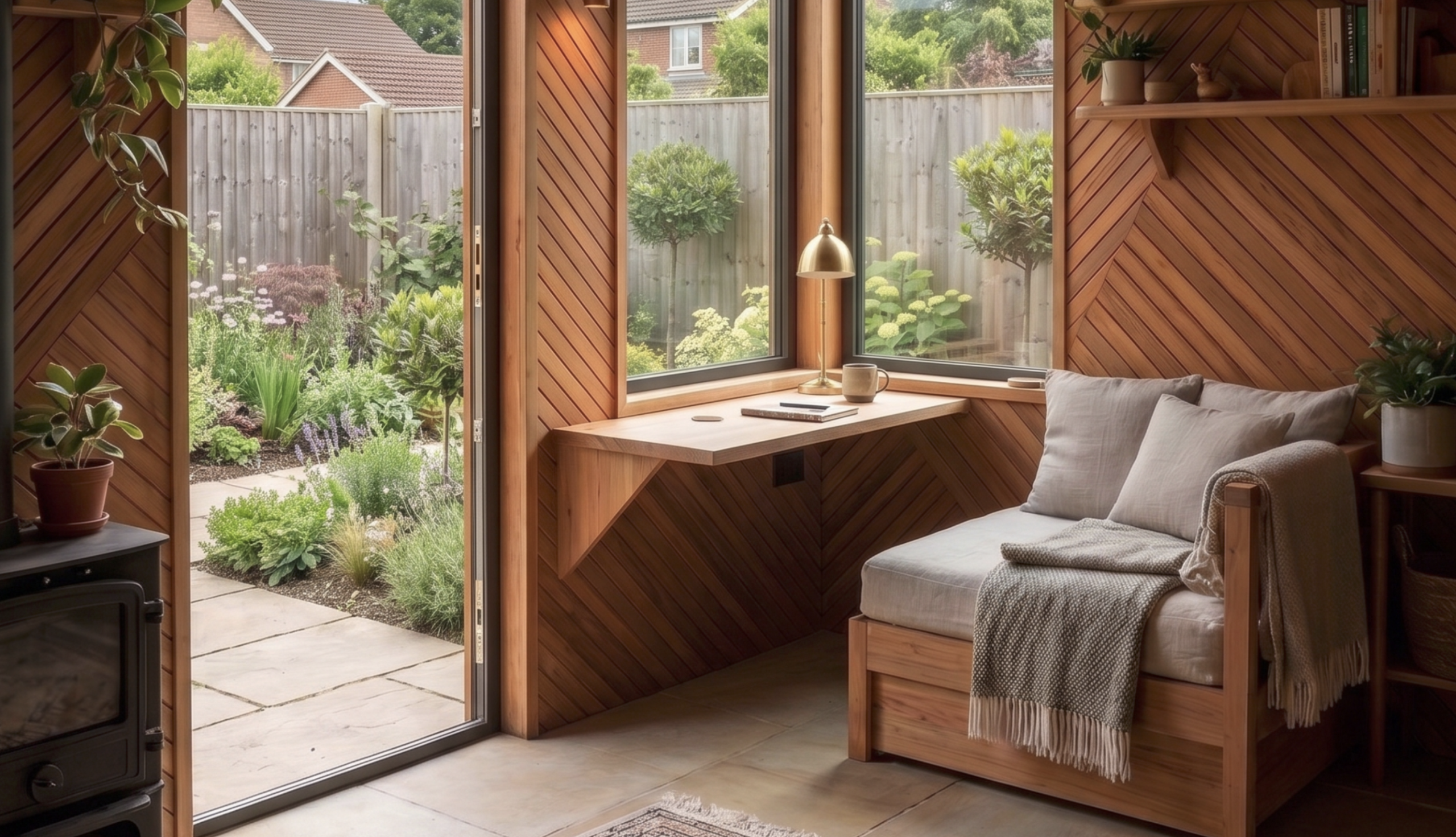
Picking the wrong material for a garden room is an expensive mistake to spot years down the line, once the paint has started peeling or the room turns too cold to sit in past October. With so many options available, it’s easy to choose based on price or first impressions rather than how a material will actually perform in a British garden. The materials below are the ones homeowners are turning to most in 2026, and each brings a different mix of looks, upkeep and comfort to the table.
1. Composite Cladding for a Low-Maintenance Finish
Composite cladding is made by combining recycled wood fibres with plastic, and it has become a popular option for homeowners who want a modern look without the ongoing care that timber demands. It holds its colour well, does not need painting or staining, and stands up to prolonged wet weather far better than untreated wood. This makes it a sensible choice for gardens that get little shelter from rain, or for anyone who would rather spend weekends enjoying their garden room than maintaining it. The trade-off is a slightly more uniform finish, without the natural grain variation that timber offers.
2. Western Red Cedar for a Natural, Premium Look
Western Red Cedar remains one of the most sought-after timbers for garden rooms, thanks to its rich reddish-brown tone when freshly installed and the soft silver-grey it develops over time if left untreated. It contains natural oils that make it fairly resistant to rot, which helps it cope with the damp conditions common across much of the UK. Homeowners drawn to a warmer, more characterful exterior tend to favour cedar over composite alternatives, even though it usually costs more and benefits from an occasional oil treatment if the original colour is worth keeping.
3. Siberian Larch for Durability Without the Premium Price Tag
Siberian Larch has grown in popularity as a mid-range option that still performs well outdoors. It’s a dense, slow-grown softwood, and according to Homebuilding & Renovating, it’s denser than western red cedar, making it more resilient to knocks and everyday wear. Left untreated, larch weathers to a similar silver-grey as cedar, but usually at a lower cost, making it a practical choice for homeowners who want a natural finish without the higher price tag of cedar.
4. Charred Timber for a Bold, Contemporary Statement
Charred timber, sometimes known by its Japanese name Shou Sugi Ban, involves burning the surface of the wood to create a deep black, weatherproof finish. It’s become a favourite among homeowners with modern, architectural gardens who want their garden room to stand out rather than blend in. The charring process makes the timber highly resistant to moisture and insects, and it needs very little upkeep once installed. It tends to suit contemporary builds far better than a traditional cottage garden, where a lighter, more natural timber usually sits more comfortably.
5. Structural Insulated Panels for Year-Round Comfort
Rather than a cladding choice, this one concerns what’s underneath it. Structural insulated panels, or SIPs, are increasingly used for the walls and roof of a garden room instead of standard timber framing. According to the Structural Timber Association, SIPs combine a rigid insulating core with two structural timber facings, creating a lightweight but strong building envelope with minimal thermal bridging, which helps hold a steady temperature through winter and summer alike. Insulation like this plays a big part in whether a garden room is worth the investment long term, since a room that stays comfortable all year gets used far more than one that’s only pleasant in summer.
Not every build uses SIPs, though. Some homeowners still prefer a solidly built timber frame, and specialists such as Elfords timber sheds continue to build using traditional 75mm x 50mm framing for durability and strength.
| Material | Appearance | Maintenance | Best For |
| Composite Cladding | Modern, uniform finish | None, no painting or staining | Exposed or shaded gardens |
| Western Red Cedar | Reddish-brown, ages to silver-grey | Occasional oiling to keep colour | A premium, characterful look |
| Siberian Larch | Straw-yellow, ages to silver-grey | None if left untreated | Natural look at a lower cost |
| Charred Timber | Deep black, matte finish | Very low | Modern, architectural gardens |
| SIPs (structure) | Doesn’t affect cladding look | Low | Year-round comfort |
Final Thoughts
There’s no single best material for every garden room. The right choice depends on how sheltered your garden is, how much upkeep you’re willing to take on, and whether you want the space to blend in or stand out. Once you’ve settled on a material, the next step is getting your garden ready for the build itself, from clearing the site to sorting access for materials and equipment, which we cover in our guide to preparing your garden for a new room build. Taking the time to get both right will help your garden room stay comfortable and good-looking for years to come.

